
English 
Tel: +86-13732621090
Email:yewu001@yushengdz.com
4F, No.68, Huian Road, Xukou Town, Wuzhong District, Suzhou, Jiangsu, China, 215105

Views: 0 Author: Site Editor Publish Time: 2025-11-17 Origin: Site


Litz wire sits at the heart of many modern high‑frequency designs, from compact power supplies to wireless charging coils. Yet many engineers and buyers still treat it as a mysterious specialty wire rather than a practical design tool. Understanding what Litz wire is—and exactly why and when to use it—can unlock major gains in efficiency, size reduction, and thermal performance.
This guide explains Litz wire in clear, application‑driven terms so you can make informed design and purchasing decisions.
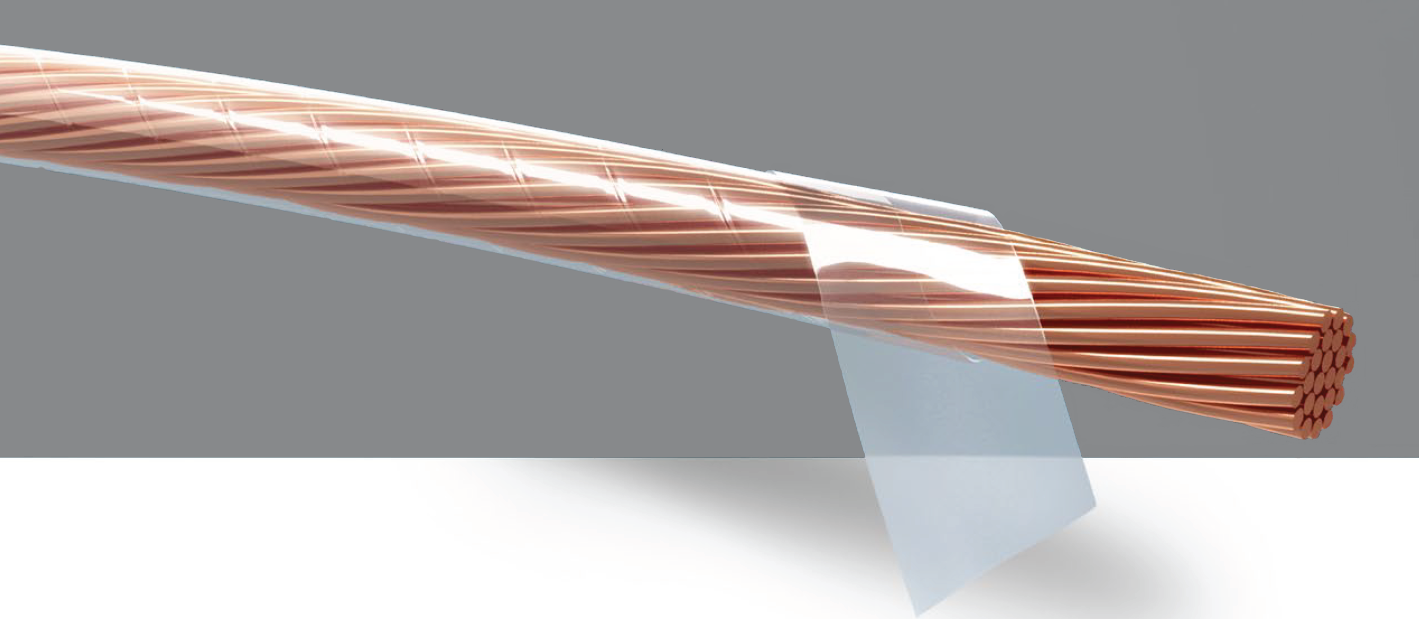
Litz wire is a high‑frequency electrical conductor made from many fine, individually insulated strands of wire that are twisted or braided together in a controlled pattern. Each strand carries part of the alternating current, and the special construction is designed specifically to reduce AC losses caused by skin effect and proximity effect.
The name “Litz” comes from the German word “Litzendraht” or “Litzen,” meaning braided or stranded wire. Unlike ordinary stranded wire—which is mainly used for flexibility—Litz wire is engineered to improve electrical performance at high frequencies.
Typical features of Litz wire include:
Dozens to thousands of copper strands
Each strand coated with its own thin insulation
Strands twisted, woven, or bundled in multiple stages
Optional serving (fiber wrap) and/or outer jacket for protection
Compared with a single solid conductor of the same cross‑sectional area, Litz wire can dramatically lower AC resistance in the kilohertz to low‑megahertz range, resulting in cooler operation and higher overall efficiency.
To understand why Litz wire exists, you need to look at what happens to current in a conductor at higher frequencies. Two physical phenomena are responsible for most of the additional losses: skin effect and proximity effect.
How Skin Effect Increases AC Resistance
In direct current (DC), current distributes uniformly across the cross‑section of a conductor. At high frequencies, however, alternating current tends to crowd toward the surface or “skin” of the conductor. This is called the skin effect.
As frequency rises:
The effective depth of current penetration (skin depth) becomes smaller
Less of the metal cross‑section is used to carry current
The effective resistance of the conductor increases compared with DC
At grid frequency (50/60 Hz), the skin depth in copper is several millimeters—larger than most wire diameters—so skin effect is negligible. But at tens or hundreds of kilohertz, the skin depth shrinks to fractions of a millimeter, and current flows primarily near the outer surface. A thick solid wire then wastes much of its copper.
In real circuits, conductors rarely operate in isolation. In inductors, transformers, and coils, multiple turns lie close together. The alternating magnetic fields produced by neighboring conductors distort current distribution inside each wire. This is the proximity effect.
Depending on how the conductors are arranged and the direction of current flow, current may be forced into narrow regions of each wire’s cross‑section, further increasing resistance and losses. Proximity effect can be even more severe than skin effect in tightly packed windings.
Combined Impact on High‑Frequency Designs
Together, skin and proximity effects:
Increase I²R losses at AC
Lower efficiency
Raise temperature and create hot spots
Degrade the performance of inductors, transformers, and RF coils
High‑frequency magnetics built from conventional solid wire or ordinary stranded wire often run hotter and less efficiently than necessary.
Litz wire’s construction directly attacks both skin effect and proximity effect.
Each individual strand in Litz wire is made small enough that its diameter is less than or on the order of the skin depth at the operating frequency. Because each filament is so fine, current can flow through nearly the entire cross‑section of that strand, instead of just a thin outer shell. This keeps the AC resistance of each strand close to its DC resistance.
Every strand is coated with its own insulation layer. This prevents the strands from electrically shorting together and behaving as one large conductor (which would reintroduce skin and proximity effects). Instead, each filament effectively acts as a separate low‑loss conductor.
Engineered Twisting and Weaving Patterns
The strands in Litz wire are not randomly bunched together. They are twisted or woven so that over the length of the cable, each strand spends roughly equal time:
Near the outer surface of the bundle
Near the interior of the bundle
By continuously exchanging radial positions, the strands “share” the regions of higher and lower magnetic field intensity. This equalizes impedance between strands and helps distribute current more uniformly among them, countering the proximity effect within the bundle.
Increased Effective Surface Area
Because there are many individual strands, the total surface area available for current at high frequency is far higher than that of a single solid wire with the same copper cross‑section. Since AC current prefers surfaces, this additional area reduces the effective AC resistance.
Frequency Range Where Litz Wire Is Effective
Litz wire is especially effective from tens of kilohertz up to a few hundred kilohertz.
Significant benefits usually extend to around 500 kHz and can remain useful up to around 1–2 MHz, depending on construction.
Above several megahertz, parasitic capacitance between strands and other effects limit its effectiveness, and other types of conductors may be more appropriate.
From a design and procurement point of view, the main advantages of Litz wire include several interrelated electrical and mechanical benefits.
Electrical Performance Advantages
Lower AC resistance compared with solid or standard stranded copper
Reduced copper losses (I²R) at operating frequency
Higher efficiency, especially in magnetics operating in the kHz–MHz range
Thermal and Reliability Benefits
Cooler operation due to reduced losses
Fewer and less severe hot spots in windings
Improved long‑term reliability and longer component life
Enhanced stability of inductance and performance over temperature
Size, Weight, and Power Density
Ability to shrink transformers and inductors for the same power rating
Higher power density in power supplies and converters
Potential to reduce the size and cost of cooling systems
Signal Integrity and EMI Control
Higher Q‑factors in inductors and resonant circuits
Better waveform preservation in RF and communication circuits
Lower electromagnetic interference thanks to more uniform current distribution
Mechanical Flexibility and Handling
High flexibility due to many fine strands
Easier routing in compact enclosures and tight layouts
Improved vibration resistance compared with solid conductors
Lifecycle Cost and Efficiency
Higher initial material cost, but
Long‑term energy savings through lower losses
Potential reduction in maintenance and cooling costs
Improved competitiveness for efficiency‑driven products
Litz wire can be built in many configurations to match electrical, mechanical, and environmental requirements.
Single‑Stage vs. Multi‑Stage Constructions
Single‑stage Litz:
A group of insulated strands twisted together once
Suitable for moderate current and simpler applications
Multi‑stage Litz:
Strands twisted into small bundles, then those bundles twisted again in one or more stages
Required for higher current capacity and tighter performance targets
Served vs. Unserved Litz Wire
Served Litz wire:
The bundle is wrapped with an additional textile or synthetic fiber serving
Offers better abrasion resistance and mechanical durability
Useful when winding on sharp edges or in high‑vibration environments
Unserved Litz wire:
No extra fiber wrap
More flexible and easier to form into tight windings
Suited to applications where mechanical stress is lower
Strand Counts and Strand Sizes
Strand counts can range from a few dozen up to many thousands of filaments
Finer individual strands are used for higher frequencies to keep strand diameter below skin depth
Overall cable size (diameter or cross‑section) is chosen based on current rating and allowable temperature rise
Round, Rectangular, and Formed Litz Wire
Round Litz wire: most common and versatile geometry
Rectangular or compressed Litz: improves fill factor in transformer windows and reduces voids
Custom shapes: optimized for unique core geometries and tight packaging constraints
Insulation and Jacket Options
Strand insulation: enamel coatings such as polyurethane, polyesterimide, or combinations
Intermediate wraps: cotton, silk, glass, or aramid tapes for added dielectric strength and mechanical support
Outer jackets: extruded PVC, PE, PTFE, FEP, and others for environmental protection, abrasion resistance, or specific regulatory requirements
Litz wire is not needed in every circuit. Its value depends on the interplay between frequency, geometry, and performance goals.
Frequency‑Based Guidance
Below roughly 20–60 kHz:
Skin effect may be modest for smaller conductors
Litz wire can still be beneficial for large cross‑sections or tightly packed windings
From ~60 kHz to several hundred kilohertz:
Litz wire often delivers substantial efficiency and thermal gains in magnetics
Up to around 1–2.8 MHz:
Carefully chosen Litz constructions can still offer meaningful loss reduction
Application‑Level Drivers for Litz Wire
Consider Litz wire when:
Efficiency is a major design requirement or marketing differentiator
Components run hot or require large heatsinks or forced cooling
Product size and weight are tightly constrained (EVs, aerospace, portable devices)
There are strict EMI/EMC requirements
You need stable, predictable performance over a long service life
Scenarios Where Solid Copper May Be Enough
You may not need Litz wire when:
Operating at low frequencies (e.g., 50/60 Hz power distribution)
Using small‑diameter wires where skin depth is larger than the conductor radius
Conductors are short and losses are a small fraction of the system’s power budget
Litz wire appears across many industries wherever high‑frequency AC currents and efficiency requirements intersect.
Power Electronics
High‑frequency transformers in switch‑mode power supplies (SMPS)
Inductors and chokes in DC‑DC converters and inverters
Power factor correction stages and EMI filters
Compact power conversion modules for telecom, industrial, and data center equipment
Wireless Power and RF Systems
Antenna coils and tuned inductors in transmitters and receivers
Coils for inductive wireless charging in consumer and industrial products
Induction heating equipment and induction cooktops
Transportation, EV, and Hybrid Systems
On‑board chargers and external EV charging infrastructure
High‑frequency DC‑DC converters in electric and hybrid vehicles
Motor and generator windings that must handle high‑frequency components
Industrial and Renewable Energy
Wind turbine power electronics and converters
High‑frequency drives and inverters in industrial automation
Uninterruptible power supplies (UPS) and energy storage interfaces
Medical and Instrumentation
Chargers and power supplies for medical devices
Imaging and diagnostic equipment with precision magnetics
High‑accuracy current sensors and measurement coils
Aerospace, Marine, and Defense
Avionics power conversion and RF systems
Sonar, acoustic telemetry, and marine communication equipment
Lightweight, high‑reliability converters in harsh or space‑constrained environments
Audio and Consumer Electronics
High‑end audio transformers and crossover networks
Efficient power stages for compact, battery‑powered electronics
Wireless charging pads, docks, and accessories
Choosing Litz wire is not just a matter of picking a strand count. Correct selection aligns electrical, mechanical, and environmental needs with cost and manufacturability.
Define Electrical Requirements First
Clarify:
Operating frequency range (fundamental plus harmonics)
RMS and peak current levels
Voltage levels and insulation requirements
Permissible power loss and target efficiency
Match Strand Diameter to Frequency
Use finer strands as frequency increases so that strand diameter remains comparable to or below twice the skin depth.
Oversized strands will not fully exploit the benefits of Litz wire at high frequency.
Choose the Appropriate Construction
Decide between single‑stage and multi‑stage bundle designs based on current, size, and performance targets.
Select round or rectangular geometries based on winding window utilization and mechanical needs.
Choose served or unserved Litz depending on how much mechanical protection is needed during winding and operation.
Insulation System and Temperature Class
Select enamel and outer insulation based on the maximum operating temperature and thermal class required.
Ensure compatibility with environmental conditions such as humidity, oils, chemicals, and altitude.
Confirm that the insulation system meets required standards (UL, IEC, automotive, medical, etc.).
Mechanical and Manufacturing Considerations
Verify that the chosen Litz wire meets minimum bend radius and flexibility requirements.
Check winding compatibility with your bobbins, cores, and automatic equipment.
Plan termination methods: soldering, crimping, welding, or specialized connectors.
Understand how enamel removal or strand fusion will be handled during production.
Balancing Cost and Performance
Litz wire typically costs more than solid magnet wire and requires more careful handling.
Evaluate system‑level benefits such as reduced copper losses, smaller magnetics, and simpler cooling.
Consider the full lifecycle cost, including energy consumption and maintenance, not just material price.
Collaborate with a Specialist Supplier
Share detailed electrical, mechanical, and regulatory requirements with your Litz wire or magnetics supplier.
Request recommendations tailored to your frequency, current, voltage, and environment.
Use prototypes and testing to validate the selected construction before full‑scale production.
Integrating Litz wire successfully into your magnetics and systems requires some practical know‑how.
Optimize Winding Geometry
Use winding arrangements that reduce proximity effect between layers and turns.
Consider interleaving primary and secondary windings to improve coupling and reduce leakage inductance while managing losses.
Avoid unnecessary crowding that increases parasitic capacitance.
Manage Parasitic Effects
Account for additional inter‑strand and inter‑turn capacitance in high‑frequency or resonant circuits.
Include leakage inductance and series resistance in simulations for accurate prediction of performance and efficiency.
Impregnation, Potting, and Cooling
Impregnate or pot windings to improve mechanical stability, vibration resistance, and heat transfer.
Choose varnishes or resins compatible with the chosen insulation system and operating temperature.
Design thermal paths so that heat from the Litz coils can be effectively conducted away.
Termination and Processing
Plan for efficient enamel removal from the many fine strands, using methods such as solder‑pot stripping, thermal stripping, or chemical stripping if needed.
Use suitable terminals, lugs, or printed circuit boards that can accommodate the full cross‑section of the Litz bundle.
Validate the mechanical strength and electrical resistance of terminations under worst‑case conditions.
Test and Validate Under Real Conditions
Measure AC resistance at the actual operating frequency, not just DC resistance.
Monitor temperature rise in prototypes under realistic loads and ambient conditions.
Compare test data with analytical or simulation models to refine both design and future Litz wire selections.
Litz wire typically costs more per unit length than standard magnet wire, and manufacturing with it can be more involved. However, the return on investment can be substantial when:
System‑level efficiency is critical
Size and weight must be minimized
Cooling systems are costly or constrained
Reliability and long service life are key selling points
As power electronics, EVs, renewable energy, and wireless charging become more widespread and compact, the case for Litz wire continues to strengthen. Advances in strand materials, insulation systems, and manufacturing techniques are further expanding its operating range and application space.
Litz wire is a specialized, high‑frequency conductor built from many individually insulated strands arranged to fight skin and proximity effects. By distributing current more evenly and increasing effective surface area, Litz wire reduces AC resistance, cuts power losses, and keeps magnetics cooler and more efficient.
You should seriously consider using Litz wire when:
Your design operates in the high‑frequency AC range (from tens of kilohertz upward)
Transformers, inductors, or coils are key performance‑limiting components
Efficiency, compactness, and thermal performance are business‑critical metrics
By understanding what Litz wire is, how it works, and how to select and apply it correctly, you can design magnetics and power systems that are smaller, cooler, and more efficient—delivering better products and stronger long‑term value.