
English 
Tel: +86-13732621090
Email:yewu001@yushengdz.com
4F, No.68, Huian Road, Xukou Town, Wuzhong District, Suzhou, Jiangsu, China, 215105

Views: 0 Author: Site Editor Publish Time: 2026-04-03 Origin: Site


In the electrical industry, material choice directly affects reliability, service life, and safety. When cables and wires must operate in high temperatures, chemically aggressive environments, or compact equipment where long-term stability matters, standard insulation materials may no longer be enough. This is where PFA becomes highly relevant. Many engineers, buyers, and manufacturers ask the same question: What is PFA material in electrical? The answer goes beyond a simple definition. PFA is a high-performance fluoropolymer used in wire and cable insulation because of its excellent resistance to heat, chemicals, flame, and electrical stress. In demanding sectors such as aerospace, medical devices, automotive electronics, industrial automation, and precision instrumentation, PFA insulated wire is valued for maintaining consistent performance even when conditions become harsh. Understanding how it works, where it is used, and why it is preferred can help decision-makers choose the right wire solution for critical applications.
PFA stands for Perfluoroalkoxy alkane, a type of melt-processable fluoropolymer. It belongs to the same broader family as PTFE, but it offers an important processing advantage: it can be melt-extruded more easily while still preserving many of the high-performance properties associated with fluoroplastics.
In electrical applications, PFA is commonly used as an insulation or jacketing material for wire and cable. Its molecular structure gives it strong resistance to temperature extremes, chemical exposure, moisture, and surface contamination. Because of these characteristics, PFA is often selected for environments where conventional plastic insulation may degrade, crack, soften, or lose dielectric integrity over time.
Electrical systems are not only about conductivity. The insulation around the conductor is equally important because it protects against short circuits, environmental damage, and mechanical failure. PFA plays a major role in these areas.
· It withstands very high continuous operating temperatures.
· It performs well in chemically corrosive environments.
· It provides strong dielectric properties.
· It resists moisture and weathering.
· It remains flexible and durable over time.
These advantages make PFA insulated wire particularly suitable for systems that cannot tolerate insulation breakdown or frequent replacement. In many advanced electrical assemblies, the cost of wire failure is far greater than the cost of choosing a premium insulation material from the beginning.
To fully understand the value of PFA in the electrical field, it helps to look at its core performance characteristics.
One of the most recognized features of PFA is its ability to operate at elevated temperatures. This makes it ideal for wiring inside equipment exposed to heat, such as industrial ovens, aerospace electronics, motors, and semiconductor systems.
PFA performs well when exposed to acids, solvents, oils, fuels, and other aggressive substances. In production facilities or laboratories where chemical exposure is common, this property helps preserve the integrity of the insulation.
PFA offers reliable dielectric performance, which is critical in signal cables, control wiring, and power transmission systems. Stable insulation helps reduce electrical leakage and supports consistent operation.
For many industries, safety standards require insulation materials with low flammability or self-extinguishing characteristics. PFA supports these safety expectations in many specialized wire constructions.
Its smooth surface helps in applications where wire must pass through tight channels, tubing, or moving assemblies. It can also reduce contamination buildup in sensitive environments.
Different insulation materials are used for different purposes. PFA is not always the lowest-cost option, but it often becomes the preferred solution when performance matters most.
Material | Temperature Resistance | Chemical Resistance | Flexibility | Typical Use Level | Processing Advantage |
PVC | Low to moderate | Moderate | Good | General-purpose wiring | Easy and economical |
XLPE | Moderate to high | Good | Good | Power and industrial cable | Good balance of cost and performance |
PTFE | Very high | Excellent | Moderate | Extreme environments | Harder to process than PFA |
FEP | High | Excellent | Good | Data and communication wire | Good for extrusion |
PFA | Very high | Excellent | Good | High-end electrical applications | Melt-processable with premium performance |
This comparison shows why fluoropolymer insulated wire choices often depend on environment, performance target, and manufacturing requirements. PFA is widely appreciated because it combines premium resistance properties with good processability.
PFA is usually chosen for high-specification applications rather than ordinary household wiring. It is especially useful when long-term reliability is essential.
Aircraft systems require lightweight, reliable, and heat-resistant wiring. PFA insulated wire is often selected because it can tolerate demanding thermal and environmental conditions.
Diagnostic machines, surgical devices, and analytical instruments often contain wiring that must endure sterilization, tight routing, and precise electrical performance.
As automotive electronics become more compact and complex, some high-temperature zones and sensitive control systems benefit from advanced insulation materials such as PFA.
Robotics, sensors, process control equipment, and factory systems may operate near heat sources, chemicals, or moving parts. PFA helps improve wire durability in these environments.
In clean, sensitive, and chemically intensive environments, PFA is valued for both purity and resistance.
Selecting the right insulation is about more than passing an initial test. Long-term performance is often the real measure of value.
A well-designed PFA insulated wire can help reduce maintenance intervals, improve operational consistency, and support equipment longevity. This is particularly important when wires are installed in difficult-to-access locations or inside costly devices where downtime is expensive.
Another benefit is dimensional and thermal stability. In applications involving repeated heat cycles, some insulation materials may shrink, harden, or deteriorate. PFA is better equipped to maintain its properties over time. This stability helps preserve both safety and electrical performance.
For manufacturers, PFA can also support product quality by allowing precise insulation construction for specialized cable designs. For end users, that often means fewer failures and more predictable results.
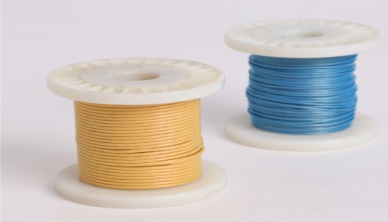
Not every electrical project requires PFA, but when it is needed, selecting the right specification is important.
Check both continuous and peak operating temperatures. PFA is best suited to applications where heat resistance is a real requirement.
Consider whether the wire will contact cleaning agents, oils, fuels, solvents, acids, or industrial chemicals.
The insulation thickness and electrical rating should match the system design and safety standard.
If the wire must bend repeatedly or fit into compact assemblies, cable construction matters just as much as insulation material.
Certain markets require specific compliance for flame resistance, environmental performance, or product testing. A reliable supplier should understand these standards clearly.
This is a common question because both materials belong to the fluoropolymer family and offer excellent resistance properties. The answer depends on the application.
PTFE is famous for its outstanding thermal and chemical resistance, but it is more difficult to process using standard melt extrusion methods. PFA offers similarly strong performance in many applications while being easier to process into wire insulation with smooth, consistent results.
That is why many wire manufacturers and OEM buyers view PFA as a practical high-performance option. It provides many of the benefits expected from PTFE while supporting more efficient manufacturing and refined wire construction.
So, if the question is whether PFA is universally better, the answer is no. If the question is whether PFA is often more suitable for premium electrical wire manufacturing, the answer is yes.
When evaluating advanced insulation options, PFA stands out as one of the most reliable materials for harsh electrical environments. It offers an excellent combination of heat resistance, chemical stability, dielectric performance, and long-term durability. For applications that involve demanding operating conditions, compact system design, or strict reliability requirements, PFA material in electrical systems provides real technical advantages over more conventional insulation choices. At the same time, selecting the right PFA insulated wire is not only about choosing a fluoropolymer; it is about matching material performance with correct wire design, manufacturing consistency, and actual application needs. From our perspective, careful material selection always leads to better electrical performance and lower long-term risk. If readers would like to explore suitable wire solutions in more detail, we recommend learning more from Yusheng Electronic Co.,Ltd. We believe practical discussion, accurate specifications, and application-based support are the best ways to help customers choose the right product without making the conversation feel overly commercial.
PFA stands for Perfluoroalkoxy alkane. It is a fluoropolymer used as a high-performance insulation material for wire and cable in demanding electrical environments.
PFA can maintain stable performance under high continuous temperatures, making it suitable for equipment and systems exposed to heat, thermal cycling, or confined hot spaces.
Yes. PFA has excellent resistance to many chemicals, oils, solvents, and corrosive substances, which makes it a strong choice for industrial, laboratory, and processing equipment.
Compared with common insulation materials such as PVC, PFA offers much better heat resistance, chemical stability, and long-term durability, especially in mission-critical applications.