
English ![]()

Tel: +86-13732621090
Email:yewu001@yushengdz.com
4F, No.68, Huian Road, Xukou Town, Wuzhong District, Suzhou, Jiangsu, China, 215105
Views: 0 Author: Site Editor Publish Time: 2026-04-05 Origin: Site
When engineers and manufacturers need wire that can continue performing in extreme environments, ordinary insulation materials often fall short. High temperatures, chemical exposure, abrasion, and long service cycles can quickly reveal the limits of standard wire constructions. That is where PEEK insulated wire becomes especially important. For industries that rely on precision, durability, and thermal stability, this type of wire is more than just a specialty option. It is often a practical answer to difficult operating conditions. In this article, we explain what PEEK insulated wire is, how it is made, why it is valued in critical applications, and what factors should be considered when selecting it. We also share our perspective as a manufacturer working with advanced wire solutions for demanding technical needs.
PEEK insulated wire is electrical wire coated or wrapped with insulation made from polyether ether ketone, commonly known as PEEK. PEEK is a high-performance thermoplastic recognized for its outstanding mechanical strength, heat resistance, chemical resistance, and electrical insulation properties.
In simple terms, PEEK insulated wire is designed for environments where common insulation materials such as PVC, PE, or even some fluoropolymers may not provide enough performance over time.
Because of its unique balance of properties, PEEK insulation is often chosen for wire used in:
· Aerospace systems
· Medical devices
· Automotive sensor applications
· Oil and gas equipment
· Industrial machinery
· High-temperature electronic assemblies
The value of PEEK insulated wire lies in its ability to maintain structural and electrical integrity under stress. In many cases, it helps improve product reliability, reduce failure risk, and extend service life.
Not all wire insulation materials are built for the same purpose. Standard materials may work well in low-cost or general environments, but PEEK is engineered for performance in more demanding conditions.
Here are some of the key differences:
Property | PEEK Insulated Wire | Standard Insulated Wire |
Temperature Resistance | Excellent for high-temperature use | Moderate to low depending on material |
Mechanical Strength | Very high | Usually lower |
Chemical Resistance | Strong resistance to many chemicals | Varies widely |
Abrasion Resistance | Excellent | Often moderate |
Dimensional Stability | High | May deform under stress or heat |
Long-Term Reliability | Strong in harsh environments | Better suited to general-purpose use |
This comparison helps explain why PEEK insulated wire is commonly associated with critical-performance industries. It is not simply selected for insulation, but for insulation that must continue functioning where failure is costly.
To understand why PEEK insulated wire is so widely respected in technical fields, it is useful to look at the material properties that make it stand out.
One of the biggest advantages of PEEK is its ability to withstand elevated temperatures. It can maintain performance in environments where many conventional insulation materials soften, crack, or degrade. This makes it suitable for systems that generate heat continuously or operate near engines, turbines, or industrial heating zones.
PEEK offers excellent toughness and resistance to wear. In wire applications, this matters because insulation may be exposed to vibration, friction, repeated movement, or tight routing. A durable insulation layer helps protect the conductor and preserve long-term electrical reliability.
PEEK can resist a broad range of chemicals, including oils, fuels, solvents, and aggressive industrial substances. This makes it useful in environments where wire may be exposed to contamination or cleaning agents.
Although PEEK is often praised for thermal and mechanical properties, it also performs well as an electrical insulator. It helps maintain signal integrity and insulation reliability in applications where precision matters.
In certain advanced applications, material purity and controlled performance are critical. PEEK can be processed to meet stringent technical requirements, especially in sectors such as medical, aerospace, and electronics.
PEEK insulated wire is not a universal choice for every project, but in the right setting, it offers clear functional advantages.
In aerospace, wire must survive challenging conditions such as vibration, weight restrictions, temperature variation, and limited installation space. PEEK insulated wire is often used because it combines high performance with relatively thin wall capability, supporting lighter and more compact designs.
Medical systems may require highly reliable wire for use in diagnostic, surgical, or implantable equipment. PEEK is valued for its durability, biocompatibility potential in certain forms, and suitability for precision applications. It can also support sterilization-related needs in some device categories.
Modern vehicles, especially electric and hybrid platforms, rely on wire that can tolerate elevated heat, compact assembly designs, and long life cycles. PEEK insulated wire may be used in sensors, motors, battery-related assemblies, and control systems where reliability is essential.
Industrial and energy environments can expose wire to oil, pressure, chemicals, and extreme thermal conditions. PEEK insulation helps support stable performance where standard insulation might age too quickly or fail.
High-end manufacturing systems often demand wire with stable electrical performance, low contamination risk, and resistance to process heat. PEEK can be a suitable insulation material in these precision-driven environments.
The decision to use PEEK insulated wire is usually based on long-term performance, reliability, and lifecycle value rather than initial material cost alone. In harsh operating conditions, insulation quality plays a critical role in determining whether a wire can continue to perform safely and consistently over time. PEEK helps reduce the risk of insulation cracking, deformation, and premature aging, which makes it especially valuable in applications exposed to heat, vibration, friction, or chemical stress. For engineers and manufacturers working in demanding environments, this added reliability can improve overall system stability and reduce the possibility of costly failures.
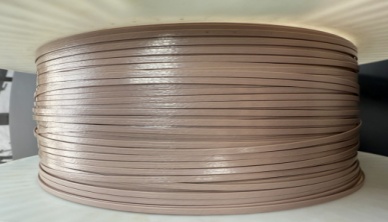
Although PEEK insulated wire offers many advantages, material selection should always be based on the actual needs of the application rather than on temperature rating alone. A proper evaluation should begin with the operating environment as a whole, including peak and continuous temperature, chemical exposure, moisture, friction, and movement. In practice, wire performance depends on how all of these factors interact rather than on a single condition. A wire that performs well in heat may still need to withstand abrasion, repeated motion, or exposure to aggressive substances, so selecting the right specification requires a broad and practical assessment of service conditions.
For general-purpose wiring, PEEK insulated wire may be more than what is needed. But for harsh environments, critical systems, and designs where failure is not acceptable, it can absolutely be worth the investment.
Its value becomes clearer when you look at the bigger picture:
· Longer service life
· Better resistance to extreme conditions
· Lower risk of failure
· Support for compact and precise design
· Stronger confidence in system performance
Instead of viewing PEEK insulated wire only as a premium product, it is often better to see it as a reliability-focused engineering solution. In the right application, the performance return can justify the higher material and manufacturing cost.
From our perspective as a wire manufacturer, selecting the right PEEK insulated wire is not just about finding a product label. It is about understanding the actual operating environment, matching the insulation structure to the conductor and end use, and maintaining stable quality throughout production. We believe technical communication matters just as much as material selection. Different industries have different expectations for heat resistance, flexibility, dimensional tolerance, and long-term reliability, so a thoughtful supplier should help customers evaluate these details with care. For companies that want to learn more about advanced wire solutions and how PEEK insulated wire may fit specific applications, Yusheng Electronic Co., Ltd. is a practical place to continue the conversation. We suggest approaching the topic from an engineering perspective first, then working with an experienced manufacturer to identify the most suitable solution rather than treating it as a one-size-fits-all purchase.
PEEK insulated wire is mainly used in high-performance environments where heat resistance, chemical resistance, and long-term durability are required. Typical applications include aerospace systems, medical devices, industrial equipment, and automotive electronics.
It is suitable for harsh environments because PEEK has excellent thermal stability, strong mechanical strength, and resistance to abrasion and many chemicals. These properties help the wire maintain reliable performance under demanding conditions.
It depends on the application. For ordinary wiring, standard insulation may be enough. However, for high-temperature, high-reliability, or space-constrained systems, PEEK insulated wire often provides better performance and longer service life.
Buyers should review operating temperature, conductor type, insulation thickness, flexibility requirements, chemical exposure, and any industry compliance needs. It is also important to confirm the supplier’s manufacturing consistency and quality control capability.


