
English ![]()

Tel: +86-13732621090
Email:yewu001@yushengdz.com
4F, No.68, Huian Road, Xukou Town, Wuzhong District, Suzhou, Jiangsu, China, 215105
Views: 0 Author: Site Editor Publish Time: 2026-04-17 Origin: Site
When engineers, manufacturers, and buyers compare high-performance wire materials, ETFE wire insulation often stands out for its balance of strength, temperature resistance, and long-term reliability. But many people still ask the same question: What is ETFE wire insulation? In simple terms, ETFE insulation is a protective fluoropolymer layer applied around a conductor to shield it from heat, chemicals, abrasion, and electrical stress. It is widely selected in industries where wires must perform consistently in demanding conditions, including aerospace, automotive systems, industrial equipment, medical devices, and electronics. Because modern electrical systems are becoming more compact and more powerful, the need for insulation materials that are thin yet tough has grown significantly. ETFE meets that need well, making it a preferred option when performance matters more than cost alone.
For companies that work with cable assemblies and precision electronic components, understanding ETFE is important not only from a technical perspective but also from a practical one. The right insulation material can improve product life, reduce maintenance risk, and support safer operation in harsh environments. In this article, we will explain what ETFE wire insulation is, how it differs from other insulation materials, where it is commonly used, and what factors should be considered before choosing it for a project.
ETFE stands for Ethylene Tetrafluoroethylene, a fluorine-based plastic known for its excellent mechanical and chemical properties. In wire and cable manufacturing, ETFE is used as an insulating jacket around conductors because it combines durability with relatively low weight and thin wall capability.
Unlike standard insulation materials that may soften, crack, or wear down in demanding conditions, ETFE is designed to maintain its performance across a broader range of operating environments. This is one reason it is often used in high-reliability industries.
Key characteristics of ETFE wire insulation include:
· High dielectric strength
· Excellent abrasion resistance
· Strong resistance to chemicals and solvents
· Good heat resistance
· Lightweight construction
· Thin insulation wall with reliable protection
These traits make ETFE insulated wire especially useful when space is limited but durability cannot be compromised.
As electrical products continue to become smaller, lighter, and more complex, insulation materials must do more with less space. ETFE fits this trend well because it can provide strong protection without requiring a thick outer layer.
ETFE can be extruded in thin walls while still offering robust insulation performance. This helps reduce cable diameter and overall system weight.
Compared with many common plastics, ETFE performs well under abrasion, impact, and repeated movement. That makes it useful in applications where wires may be routed through tight spaces or exposed to vibration.
ETFE is not just a material for surviving extreme conditions once. It is valued because it can continue performing over time under repeated thermal and mechanical stress.
To better understand the value of ETFE, it helps to look at its main performance features in a more structured way.
Property | ETFE Wire Insulation Performance | Why It Matters |
Heat Resistance | Performs well in elevated temperatures | Suitable for hot operating environments |
Abrasion Resistance | Very strong | Helps protect wires during installation and use |
Chemical Resistance | Excellent | Resists oils, fuels, solvents, and many industrial chemicals |
Electrical Insulation | High dielectric strength | Supports safe and stable electrical performance |
Weight | Lightweight | Useful for aerospace, automotive, and compact systems |
Thin-Wall Capability | Strong even at reduced thickness | Saves space without sacrificing protection |
Durability | Long service life | Reduces replacement and maintenance frequency |
This combination of properties explains why ETFE wire insulation is often chosen for premium cable solutions rather than general-purpose wiring.
When customers ask, “What is ETFE wire insulation?” they often also want to know how it compares with more familiar insulation materials such as PVC, XLPE, or PTFE. Each material has its own strengths, but ETFE occupies a useful middle ground between performance, processability, and cost.
PVC is common and cost-effective, but it generally offers lower temperature resistance and less mechanical toughness than ETFE. For standard household or light commercial applications, PVC may be sufficient. For harsher conditions, ETFE is often the better choice.
XLPE provides good thermal performance and is widely used in power cable applications. However, ETFE usually offers better abrasion resistance and chemical resistance in more specialized electronic and industrial environments.
PTFE is another fluoropolymer with excellent temperature and chemical resistance. However, ETFE is often selected when a project needs strong mechanical toughness and easier processing while still maintaining high performance.
· PVC: Lower cost, lower performance
· XLPE: Good thermal properties, common in power applications
· PTFE: Excellent high-end performance, often higher cost
· ETFE: Balanced option for high-performance, thin-wall, durable wire insulation
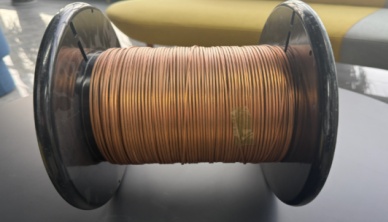
ETFE insulated wire is typically used where reliability is essential and operating conditions are more severe than average. It is not always necessary for every project, but in demanding applications it can provide clear advantages.
In aerospace environments, every component must meet strict standards for performance, weight, and durability. Wires may be exposed to vibration, temperature variation, and confined installation spaces. ETFE’s thin-wall structure and strong abrasion resistance make it a practical insulation choice in aircraft wiring systems.
It is also valued for helping reduce overall harness weight while maintaining protective performance. In systems where every gram matters, material selection becomes very important.
Modern vehicles contain increasingly complex electrical systems. From engine compartments to battery systems and onboard electronics, wires must tolerate heat, fluids, and mechanical wear. ETFE insulated wire can help meet these requirements, especially in specialized or high-performance transportation applications.
It may be used in:
· Sensor wiring
· Control systems
· Engine-area cable routing
· Electric mobility systems
· Harsh-environment harness assemblies
As vehicles become more electrified, the role of advanced insulation materials continues to grow.
Industrial machinery often operates in environments where wires are exposed to oils, solvents, friction, and repeated motion. ETFE can help improve wire longevity in such conditions. It is also useful in compact electronic equipment where thin yet strong insulation supports better internal layout design.
For manufacturers of industrial assemblies, ETFE insulated wire can contribute to both durability and more efficient product packaging.
Some medical and precision electronic applications demand clean, dependable wiring materials with stable electrical performance. ETFE’s physical strength and resistance profile make it suitable for selected specialized uses, particularly where small-diameter, high-reliability wires are needed.
Beyond its technical specifications, ETFE offers practical business and engineering benefits.
A stronger insulation layer means less risk of damage during installation, movement, or long-term operation.
Because ETFE can be used in thin-wall constructions, engineers can design more compact cable assemblies without giving up insulation integrity.
In harsh environments, a more durable insulation material can lower the chance of early failure, reducing service interruptions and replacement costs.
Where compliance, reliability, and long service life matter, ETFE is often considered a more dependable choice than basic insulation materials.
So, what is ETFE wire insulation? It is a high-performance fluoropolymer insulation material designed to protect wires in environments where heat, abrasion, chemicals, and limited space all present challenges. Its combination of thin-wall capability, mechanical toughness, and dependable electrical insulation makes it a valuable choice in industries that cannot afford inconsistent performance. While it may not be required for every cable application, it is often the right fit when durability and reliability are essential.
At Yusheng Electronic Co., Ltd., we understand that choosing the right wire insulation material is part of building a more reliable end product. When customers need support in evaluating cable materials, wire specifications, or suitable solutions for demanding applications, we believe clear technical communication matters just as much as manufacturing capability. Readers who would like to learn more about ETFE insulated wire, application matching, or related cable solutions are welcome to get to know Yusheng Electronic Co., Ltd. in more detail and explore the options that best fit their project requirements.
ETFE is generally better than PVC in demanding environments because it offers higher heat resistance, stronger abrasion resistance, and better chemical protection. PVC may still be suitable for lower-cost, general-purpose applications.
ETFE insulated wire is commonly used in aerospace, automotive systems, industrial machinery, electronics, and other applications where wires must resist heat, wear, and harsh operating conditions.
Yes. One major advantage of ETFE is its thin-wall capability. It can provide strong insulation protection while keeping wire diameter smaller, which supports compact product design.
Buyers should evaluate temperature range, chemical exposure, mechanical stress, installation space, industry standards, and overall cost-performance requirements before selecting ETFE insulated wire.


